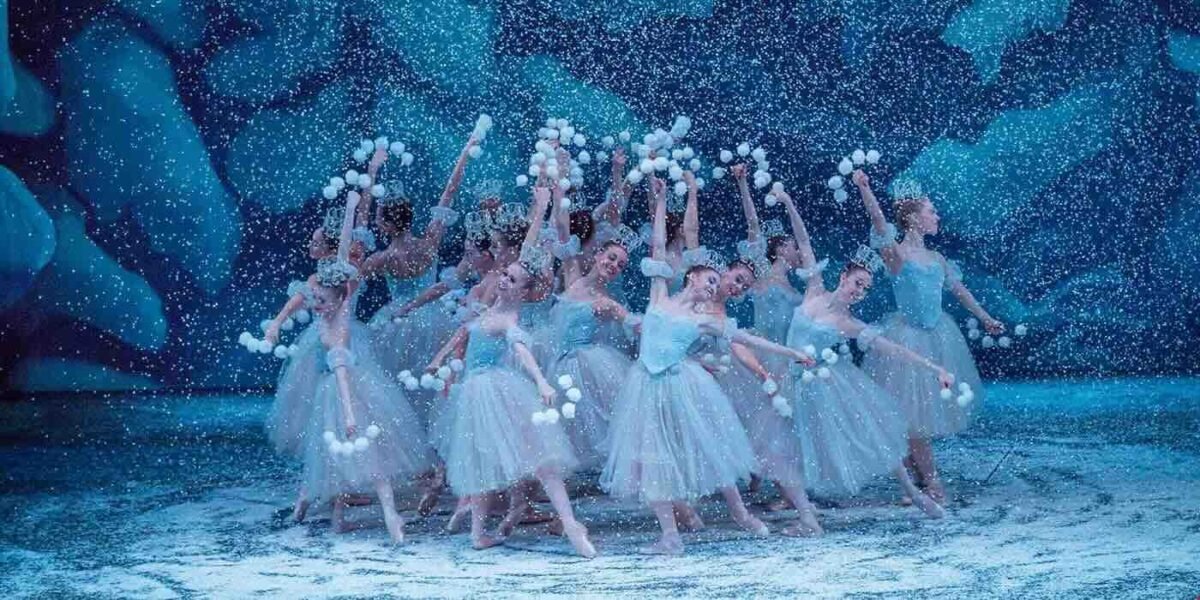
What kind of skirts should kids wear to the ballet classes?
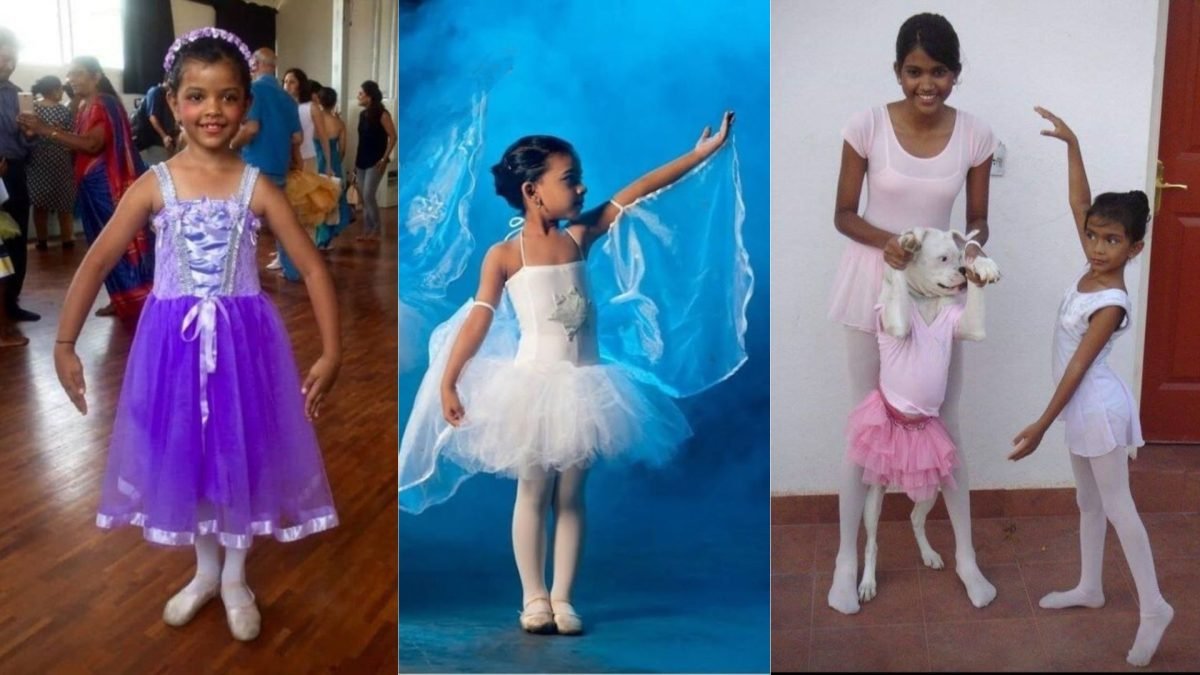
In Ballet, every part of the uniform has more reason to be so than just the aesthetics. Students have to wear proper ballet skirts to the classes because they have to hold their skirts with their thumb and fingers, so that their arms come in a curve. Later it becomes an arm position in ballet, called Bras bas. Tutus are not advisable to be worn as regular uniform in ballet classes.
Which shoes should be worn to the ballet classes?
Ballet shoes ofcourse! In Ballet, feet movements are essential. Shoes are supposed to help students get these movements. There are reasons why other shoes can’t be worn – either the top of these shoes is not wide enough for their toes, or the shoes have too thick a sole – these inhibit children from pointing their feet properly or doing jumps in ballet.
There are many less-privileged kids in our country, and a very few of these find a different fortune than the usual! Anand is one of these very few. Anand is somebody who dropped out of school in 5th standard due to economic pressure at home & who started working as a coconut cutter and then as a child labourer. Yet, Anand is the one who shall be playing the lead role in the upcoming Lewis Foundation’s show ‘The Nutcracker’!

Change came to Anand’s life when he was taken to a Kid’s Camp, organised by Born Free Arts School, by a friend. This camp was in August’ 2005 and invited teachers from different organizations to educate children. Yana Lewis was one of the teachers invited. In addition to giving a workshop to the students, Yana also offered free training to the students she met at the camp. Some 4-5 kids came to Yana for the training, but it is only Anand who has remained with her till date.
Anand, as Mioi (co-director of Born Free Arts School) tells, didn’t know how to read English when he came to Born Free. It was a 3,000 kms long cycling trip, in 2006, whose photographs were assigned to Anand to tag and name. This aroused his interest in being able to read and write. Similarly, a cycling trip from Bangalore to Lahore, carrying letters of love from children of India to Pakistan aroused his interest in politics. The gest of these examples is that the interest he has discovered in education is so contrary to the childhood Anand who used to hate going to school!
Currently, Anand is pursuing a degree in arts in St. Josephs College in English medium, works in theatre and dance at Born Free and attends ballet classes with Yana regularly. Arts and dance made Anand’s life so much more meaningful than it used to be.
Dance is a discipline and it has its own rules. An essential part of the discipline is the attire one wears for dance classes. There is logic behind proper attire – It is essential so that your teacher can check the muscles you are engaging and if you are engaging them to the correct extent. The proper attire is necessary to provide you with the freedom to move; to avoid restrictions on any part of the body whilst dancing.
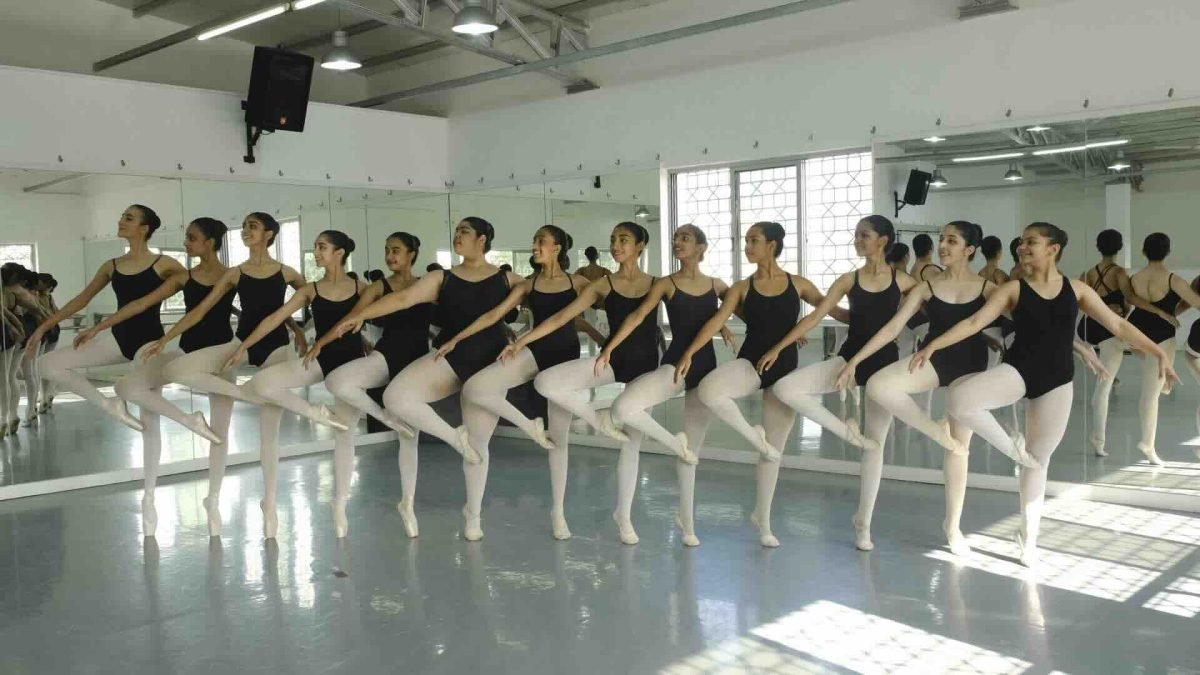
In this issue, we’ll cover one important part of the ballet attire – the ballet tights. Ballet tights are long legging-like garments. For girls, tights are thin, almost see through; whereas boys wear slightly thicker tights which prevents the leg hairs from being visible. Ballet tights are generally made of stretchable micro-fibre that allows free movement of legs and helps students to execute jumps and leaps without any limitations. Their skin-hugging nature makes the form of leg muscles easily discernable to the teacher making it possible to check if the muscles (esp. knee and thigh muscles) are pulled up correctly whilst performing the steps.
Ballet tights come in three styles – footed, footless and convertible. The footed ones go over the foot, covering the foot fully; and the footless ones reach only to the ankles. The convertible ones can be worn both ways. They have a hole at the back and thus can be rolled up to the ankles.
One question that occurs to many young dancers about the tights is how to put them on! The correct way to do so is to roll up each leg of the tight first. An important point to note is that your tights are not to be pulled up like pants, as doing so may cause you to tear them. Try rolling up your tights before you put them on.
I hope you now understand the importance of wearing tights. Make sure you wear them for every ballet class. See you at the barre!
Let me introduce one of the greatest choreographers in the history of ballet, George Balanchine – born as Georgi Melitonovitvh Balanchivadze in St. Petersburg, Russia in the year 1904. Originating in Italy, ballet remained a mainly Euro-Russian form of dance until Balanchine took it to America. Around 400 works in ballet; master & principal choreographer of the most famous ballet company in the world (The Ballet Russes in Paris) at an age of 21; founder & artistic director of the New York City Ballet – Balanchine was the magic man who did all that!

Balanchine was nine when he danced his first ballet – The Sleeping Beauty (at Imperial Ballet School). By 1921, Balanchine was working with the State Academy of Opera & Ballet as well as studying piano at St. Petersburg Conservatory of Music. Great knowledge of music gained here helped Balanchine to collaborate with composers (worked on more than 30 compositions with the American composer Igor Stravinsky).
Balanchine presented his first choreography (La Nuit, a pas-de-deux) while he was a teenager. In 1933, he was invited to America by Lincoln Kirstein, a Boston born dance connoisseur who dreamt to establish American School of Ballet. Their school, established in 1934, the School of American Ballet (later to be called the American Ballet Academy) performed Balanchine’s first original ballet in America – Serenade. They formed the company – the New York City Ballet in 1948. One of the most famous performances of ballet, The Nutcracker (1954), was New York City Ballet’s first full-length ballet.

Balanchine's Serenade
Balanchine died as the master at the New York City Ballet in 1983, setting a mark in the history and the name that can never die. From taking it to America to giving his unique styles to it, he dedicated his life to the dance form, that is, ballet.
This prolific choreographer’s work has been performed all around the world. Work hard, and in the future, you could be the first dancers to perform Balanchine here in India!
The world of Cinema has not remained untouched by ballet. From ‘The Turning Point’; to ‘Mao’s last dancer’ & ‘Centrestage’; to the latest, ‘Black Swan’, ballet based movies have been created by most talented of the film-makers and have managed to impress the most critical viewers.
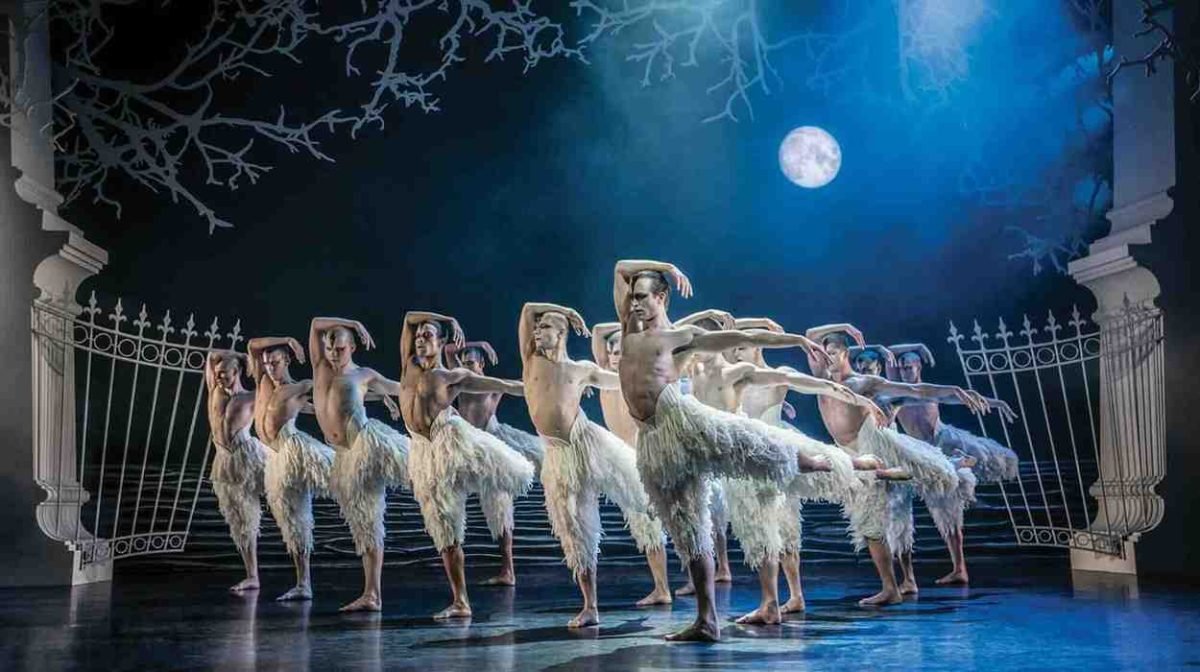
Black Swan, a pscychological thriller by Darren Aronofsky, is based on Tchaikovsky’s ballet ‘Swan Lake’, composed in 1876. The ballet is about Princess Odette who is trapped in a swan’s body (Swan Queen) by an evil sorcerer, Von Rothbart. The spell set by Rothbart can only be broken when Prince Siegfried expresses his love to Odette. While Siegfried wants to marry Odette, but can not reach her, Rothbart disguises his daughter, Odile (Black Swan), to look like Odette and wants to trick the prince to marry Odile. End of the play shows a battle between Rothbart, Black Swan and the swans of the Swan Lake & Siegfried. After Rothbart is defeated, Siegfried breaks the spell on the swans and marries Odette.
The movie shows a ballerina, Nina struggling for perfection in the Swan Lake ballet to be presented by the New York City Ballet. When Nina is appointed for the lead role, she is supposed to play the roles of both the Swan Queen and the Black Swan. While she has all the technique, the ballet requires her to also know and be the two characters she has to play. She can be the Swan Queen but fumbles when she dances the Black Swan. Understanding the dark character of Black Swan takes Nina to discover another side of her character, a dark side which brings to her the disturbing visions and hallucinations. She loses track of reality and her identity due to the hallucinations and is lead into committing a suicide!
Nina’s insecurities and her obsession for perfection, the causes that take her into the loop of self-destruction, have proved to resonate in viewer’s minds. Unparalleled ballet performances, technical brilliance, acting by Natalie Portman (Nina) and the story about Nina’s psychosis are believed to be the high points of the movie. The movie secured nominations for Best Director and Best Picture and Portman managed to secure the Academy Award for the Best Actress. The conclusion being, excellent art works continue to charm the world!
Pilates are exercises developed by Joseph Pilates in the early 20th Century. He also called it ‘contrology’ – controlling muscles by mind. But, I also think that it’s contrology because body can control mind, that is to say exercises can improve our cognitive ability and reduce depression.
Pilates are aerobic exercises and focused breathing is an essential component. The posture adopted for these exercises involves keeping the lower abdomen as close to the spine as possible. Squeezing in the abdomen keeps the abdominal muscles engaged and directs the breath into the back and sides of the rib cage. This increases the intake of oxygen and makes our blood richer in oxygen.
With better blood circulation, improved mental health comes for free! Oxygen-rich blood supply to the brain reduces depression levels and improves cognitive abilities like memory & executive functions (planning, organization etc.). In fact, the forgetfulness people experience due to aging (senile dementia) happens due to obstructions of blood flow in certain blood vessels of the brain. People who do aerobic exercises regularly show slower aging, physically as well as mentally!
Join our Callanetics & Pilates classes. click here >>
Ballet is not just a dance form; it’s a science that teaches skills to develop a well-rounded body. Ballet technique is physically the most demanding dance technique to execute. It is also the technique that works to develop each and every muscle of the body. So, ballet is not just for the dancers but for anybody who aspires to have a healthier, stronger body.
Ballet is known to be used for training of athletes and sports people. Famous football players, like Lynn Swann and Herschel Walker, are known to have learnt ballet. Benefits of ballet for the athletes can be better understood through the following points:
- Ballet works on overall body and hence strengthens every muscle, including the ones that are not usually used in weight rooms.
- Ballet is a science that teaches how to become less injury prone in our physical actions. For instance, one is taught to land through the feet in leaps and jumps. This puts us into the habit of not landing with a thump after a jump, thus preventing injuries to ankles or lower legs.
- Ballet focuses on footwork, works with lower legs, ankles and feet, thus increasing balance and stability for running.
- Turns and pirouettes that are taught in ballet teach sports persons how to change direction quickly and with more balance.
- Athletes do not learn ballet to become dancers but to take benefits from the exercises that are a part of the classes. Ballet classes always include barre work which is a set of exercises done holding a bar. These exercises work with the feet, ankles, knees, hip joints, legs, arms and torso.
- Ballet works on developing core strength, that is, muscles in the abdomen and back. More the core strength better is one’s balance and higher jumps one can make.
- Chassé & glissade – Such steps taught in ballet can teach students to transfer weight smoothly and evenly.
- Overall, ballet increases body awareness – the common requisite for dancers and players.
- Learning ballet requires sincerity and passion. Thus, it can give more than the body-building benefits. It makes the learners disciplined and focused.
To learn ballet in Bangalore, you can join our classes. Know more >
“If there was no Yana in my life, there would be no dance in my career”, says Saravana, the founder of Agnii dance group. (http://wn.com/saravanadhanapal)

Saravana’s childhood was without a father and with poor economic conditions as the family’s only money source was his mother, a banana seller. He couldn’t go to a proper school and therefore, got educated through evening classes. Since school was in evening, Saravana used to spend the free day-time dancing! From childhood itself, he found his interests, that is, theater, dance & gymnastics.
When he was in 11th standard, Saravana met Yana while she was taking one of her classes. His sincerity and skill could not escape Yana’s eyes and thus, she invited him for all her classes, and offered him the classes for free. Through the classes, he was imparted knowledge and body awareness for dancing, which he then incorporated in the dance forms (for instance, fire dance) that he does. He grew as a dancer and formed his own dance group. Today, The Agnii group is well known and has taken its unique dance style to other countries, like Spain, for cultural exchange.
Saravana has known Yana for about 10 years and still comes to her classes. He feels that Yana has given him so much more than just dance. According to him, she has taught him skills for life like confidence and courage, and motivated him to be beyond what he thinks he is. He says, “When I think of Yana, I feel very powerful, I feel a lot of energy in me”. Saravana appreciates the inner beauty Yana possesses and expresses his tons of love for her every time he talks about her. He acknowledges her honesty, her being an individual with no bias and her generosity.
Although masks, bulky costumes & large headdresses continued to keep ballet a majorly flamboyant dance form, the eighteenth century saw dancers who attempted to bring changes into both the dressing style and dancing style in ballet.
Two among such dancers are the french ballerinas are Marie Camargo and Marie Salle. Marie Salle was the first woman to dance in self-choreographed ballets. She discarded the 18th Century typical ballet costumes for a Grecian-style muslin dress to perform in her own ballet, Pygmalion (London, 1734). Marie Camargo, another pioneer, is remebered for her speed and agility. It was for displaying her perfection at jumps that she shortened her ballet-skirt and adopted ballet slippers instead of heels. Marie Camargo is thus credited with three innovations in ballet, that is, ballet slippers, short calf-length ballet skirt and ballet tights.
Marie Salle proved to be a precursor to the 18th Century ballet revolutionist, Jean Georges Noverre, as her ballets focused on integrating the music, costumes, and dance styles with the theme. Jean Georges Noverre brought the style, ballet d’action (conveying a story through movement) to ballet. His book Lettres sur la danse et les ballets (Letters on Dancing and Ballets) made vast impact on the ballet style and motivated other choreographers to emphasise on expressing emotions in ballet.
The year 1795 saw the first ballerinas to rise on their pointe toes. There existed no blocked toe shoes during this period. Invisible wires were therefore used in Charles Didelot’s ‘flying machine’ to hold the dancers to stand on their toes. Other performances showed dancers who balanced on their toes for a moment or two only, on strengthened/darned slippers.